
Your Eyes Shouldn’t Feel Dry, Watery or
Uncomfortable Every Day
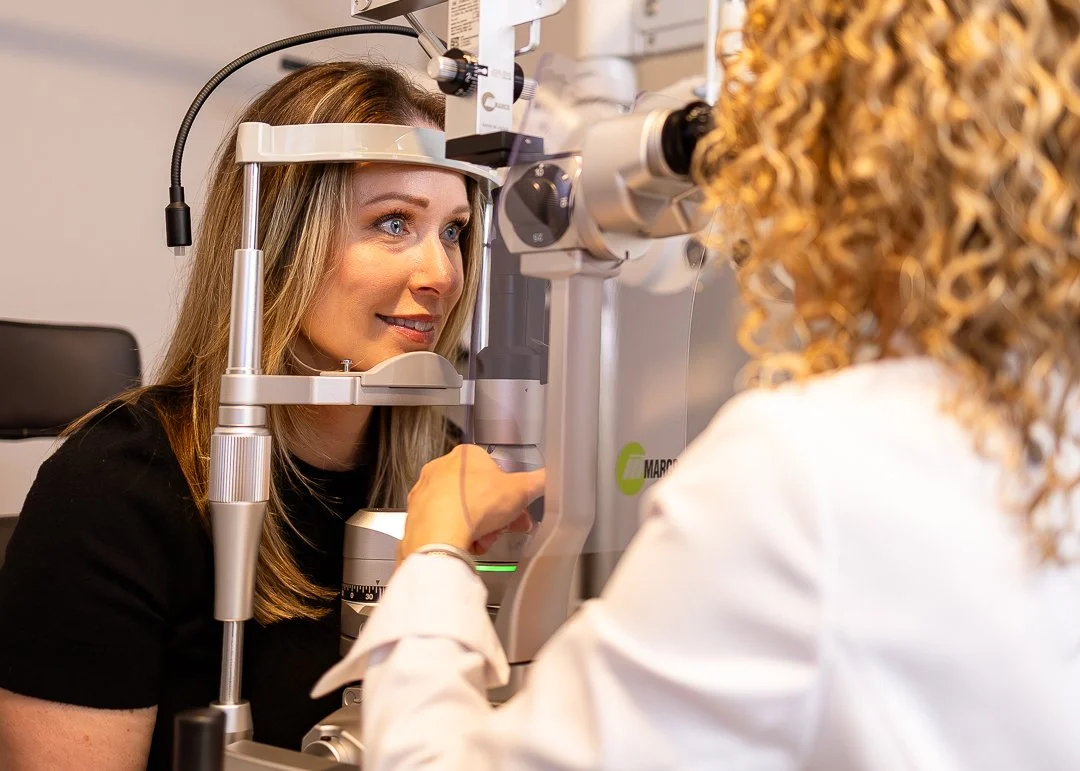
Comfortable eyes are essential to healthy vision. If your eyes feel dry, tired, irritated, watery, or change throughout the day, a comprehensive dry eye evaluation can help identify the cause and guide personalized care.
Dry eye disease is common but often overlooked. Although many people think dry eye simply means a lack of tears, it is often caused by poor tear quality, ocular-surface inflammation, meibomian gland dysfunction, or an unstable tear film. Without treatment, dry eye can affect vision, comfort, contact lens wear, and long-term eye health.
At The Eye Collective, we look beyond temporary relief to understand what is causing your symptoms. With advanced imaging, a detailed ocular-surface evaluation, and a conversation about how your eyes feel throughout the day, we create a clear, personalized plan to improve comfort and support long-term ocular wellness.
Do Any of These Feel Familiar?
Dry, Gritty or Sandy Eyes
A persistent feeling that something is in your eyes.Burning or Stinging
Discomfort that may become more noticeable throughout the day.Watery Eyes
Excess tearing can be a sign of an unstable or irritated tear film.Red or Irritated Eyes
Recurring redness that does not fully resolve with artificial tears.Fluctuating or Blurry Vision
Vision that temporarily clears after blinking or using drops.
Tired, Heavy Eyes
Eye fatigue that worsens with reading, driving or screen use.Contact Lens Discomfort
Lenses that become dry, irritating or difficult to wear comfortably.Itchy or Crusted Eyelids
Flaking, buildup or irritation along the eyelashes and lid margins.Recurring Styes or Chalazia
Repeated eyelid bumps that may be associated with blocked oil glands.Light Sensitivity
Increased discomfort in sunlight, bright rooms or while driving at night.
Because no two patients experience dry eye the same way, treatment begins with an accurate diagnosis. By identifying the underlying cause—not simply masking symptoms—we can create a personalized plan focused on improving comfort, stabilizing your tear film, and supporting the long-term health of your eyes.
Our goal is simple: to help you see clearly, feel comfortable, and enjoy healthier eyes every day through advanced diagnostics and individualized care.
A Closer Look at What Your Eyes Need
Our dry eye evaluation goes far beyond a routine eye examination. We combine advanced diagnostic technology with a personalized assessment to determine the root cause of your symptoms and develop a treatment plan tailored specifically to your eyes.
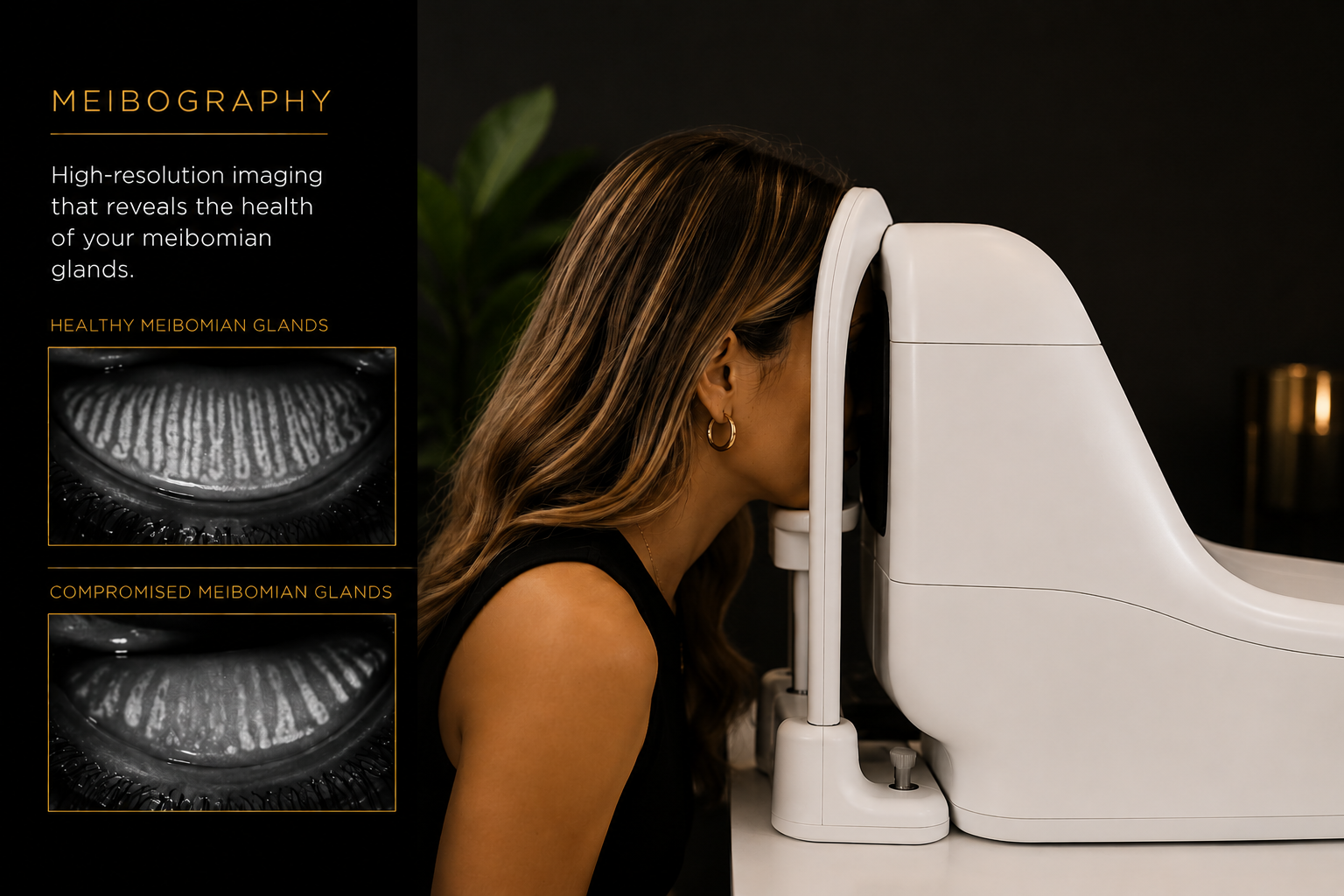
Your evaluation may include:
Meibography to evaluate the health and structure of your meibomian (oil) glands
Corneal and ocular surface evaluation to assess damage caused by dryness and inflammation
Tear film analysis to evaluate tear quality and stability
Blink analysis to determine whether incomplete blinking is contributing to dry eye
Anterior segment photography and video imaging to document findings and monitor treatment progress
Lid margin evaluation for blepharitis and meibomian gland dysfunction (MGD) Assessment of environmental, medical, hormonal, and lifestyle factors that may contribute to your symptoms
Contributing-Factor Assessment to understand how medications, hormonal changes, systemic health, screen use, contact lens wear, airflow, and daily habits may be influencing your symptoms
Conditions We Evaluate
-
When the eyelid’s oil glands become blocked or produce poor-quality oil, tears evaporate too quickly. This is one of the most common causes of dry eye and may also contribute to recurring styes or chalazia.
-
The eyes do not produce enough of the watery component of the tear film to keep the ocular surface adequately protected and lubricated.
-
Ongoing ocular-surface inflammation can disrupt tear production, damage the tear film, and create a cycle of irritation, redness, and fluctuating vision.
-
Inflammation and buildup along the eyelid margins can affect the eyelashes, oil glands and stability of the tear film.
-
An overpopulation of microscopic Demodex mites around the eyelashes can contribute to itching, redness, lash-line debris and chronic eyelid inflammation.
-
Rosacea can affect the eyelids, oil glands and ocular surface—even when facial symptoms are subtle—leading to redness, burning, inflammation and unstable vision.
-
Reduced corneal sensitivity can interfere with the eye’s natural healing response. Since symptoms may not reflect the severity of the condition, careful evaluation and monitoring are especially important.
-
Hormonal changes, certain medications and systemic health conditions can alter tear production, inflammation and meibomian gland function.
-
Screen use, reduced blinking, sleeping with the eyes partially open and direct airflow can leave areas of the ocular surface insufficiently protected.
-
Changes in tear quality or ocular-surface health can make previously comfortable contact lenses increasingly difficult to wear.
-
Recurring eyelid bumps may be connected to blocked meibomian glands, chronic blepharitis or inflammation that requires more than treatment of the individual bump.
-
Many patients have more than one form of dry eye, such as reduced tear production combined with meibomian gland dysfunction, inflammation or eyelid disease.
Dry eye is not a single diagnosis. Several conditions can disrupt the tear film, eyelids, and ocular surface, and many patients have more than one contributing factor. Your evaluation is designed to identify what is driving your symptoms so your care can be truly personalized.