
 Image 1 of 1
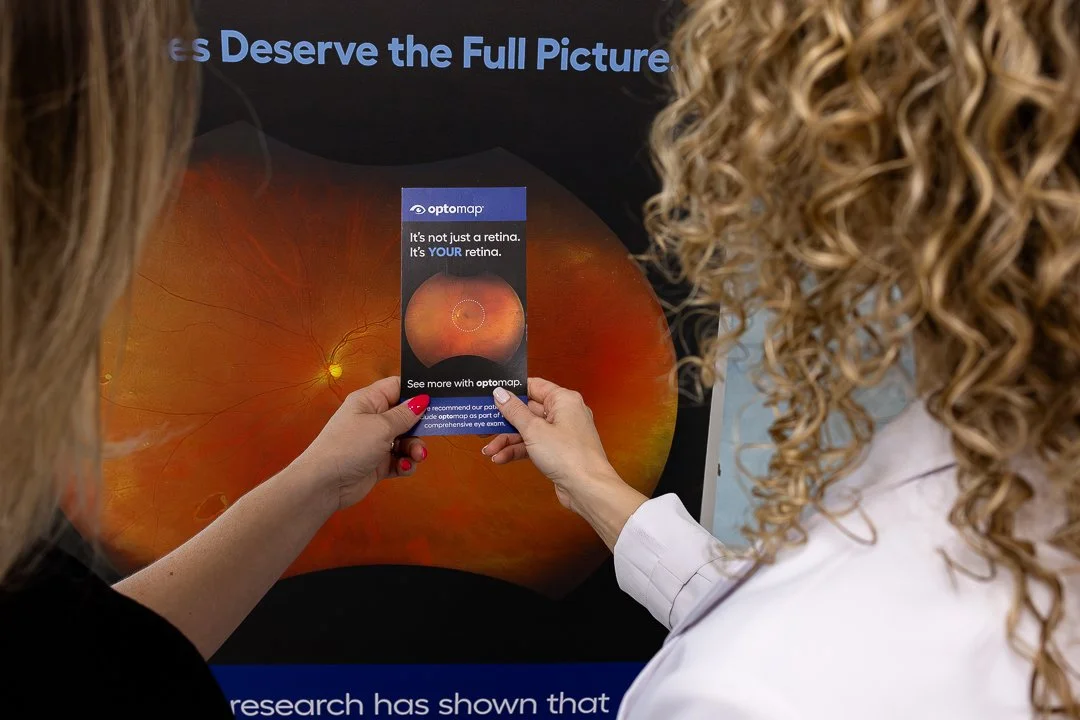
The health of your retina is essential to the quality of your vision. Advanced screening allows us to detect retinal disease early and protect your sight for the future. Every comprehensive eye examination at The Eye Collective includes a thorough evaluation of your retina with advanced imaging and personalized monitoring designed to detect retinal conditions before they threaten your vision.
The retina is the light-sensitive tissue lining the back of the eye that converts light into signals your brain interprets as vision. Because many retinal diseases develop silently, significant damage can occur before symptoms are noticed. Early diagnosis is often the key to preserving vision and preventing permanent vision loss.
While age-related macular degeneration and diabetic eye disease are among the most common retinal conditions, we also evaluate for a wide range of retinal disorders, including:
Retinal tears and detachments
Retinal holes and lattice degeneration
Epiretinal membranes (macular pucker)
Macular holes
Central Serous Chorioretinopathy (CSCR)
Retinal vein and artery occlusions
Hypertensive retinopathy
Inherited and other retinal disorders
Patients with high levels of nearsightedness, diabetes, high blood pressure, a family history of retinal disease, previous eye trauma, or increasing age may have a greater risk of developing retinal conditions. New symptoms such as flashes of light, a sudden increase in floaters, distortion, or a curtain or shadow over your vision should always be evaluated promptly.
Every comprehensive eye examination includes a detailed assessment of your retina. When additional evaluation or ongoing monitoring is needed, we utilize advanced technology to detect even subtle retinal changes, including:
High-resolution retinal imaging (OCT)
Digital retinal photography
Comprehensive dilated retinal examinations
Peripheral retinal evaluation
Long-term comparison of retinal images to monitor stability or progression
If a retinal condition is identified, we develop an individualized management plan based on your diagnosis and visual needs. Some conditions can be safely monitored in our office, while others require prompt treatment by a retinal specialist. When advanced care is needed, we coordinate closely with trusted retinal surgeons to ensure seamless communication and continuity of care while remaining your partner in long-term eye health.
Our goal is simple: to detect retinal disease as early as possible, preserve your vision, and provide thoughtful, personalized care that supports the health of your eyes for years to come.
The health of your retina is essential to the quality of your vision. Advanced screening allows us to detect retinal disease early and protect your sight for the future. Every comprehensive eye examination at The Eye Collective includes a thorough evaluation of your retina with advanced imaging and personalized monitoring designed to detect retinal conditions before they threaten your vision.
The retina is the light-sensitive tissue lining the back of the eye that converts light into signals your brain interprets as vision. Because many retinal diseases develop silently, significant damage can occur before symptoms are noticed. Early diagnosis is often the key to preserving vision and preventing permanent vision loss.
While age-related macular degeneration and diabetic eye disease are among the most common retinal conditions, we also evaluate for a wide range of retinal disorders, including:
Retinal tears and detachments
Retinal holes and lattice degeneration
Epiretinal membranes (macular pucker)
Macular holes
Central Serous Chorioretinopathy (CSCR)
Retinal vein and artery occlusions
Hypertensive retinopathy
Inherited and other retinal disorders
Patients with high levels of nearsightedness, diabetes, high blood pressure, a family history of retinal disease, previous eye trauma, or increasing age may have a greater risk of developing retinal conditions. New symptoms such as flashes of light, a sudden increase in floaters, distortion, or a curtain or shadow over your vision should always be evaluated promptly.
Every comprehensive eye examination includes a detailed assessment of your retina. When additional evaluation or ongoing monitoring is needed, we utilize advanced technology to detect even subtle retinal changes, including:
High-resolution retinal imaging (OCT)
Digital retinal photography
Comprehensive dilated retinal examinations
Peripheral retinal evaluation
Long-term comparison of retinal images to monitor stability or progression
If a retinal condition is identified, we develop an individualized management plan based on your diagnosis and visual needs. Some conditions can be safely monitored in our office, while others require prompt treatment by a retinal specialist. When advanced care is needed, we coordinate closely with trusted retinal surgeons to ensure seamless communication and continuity of care while remaining your partner in long-term eye health.
Our goal is simple: to detect retinal disease as early as possible, preserve your vision, and provide thoughtful, personalized care that supports the health of your eyes for years to come.